Going in circles: Insights from the first Brussels Climate Week
Looping back to last month’s Brussels Climate Week.
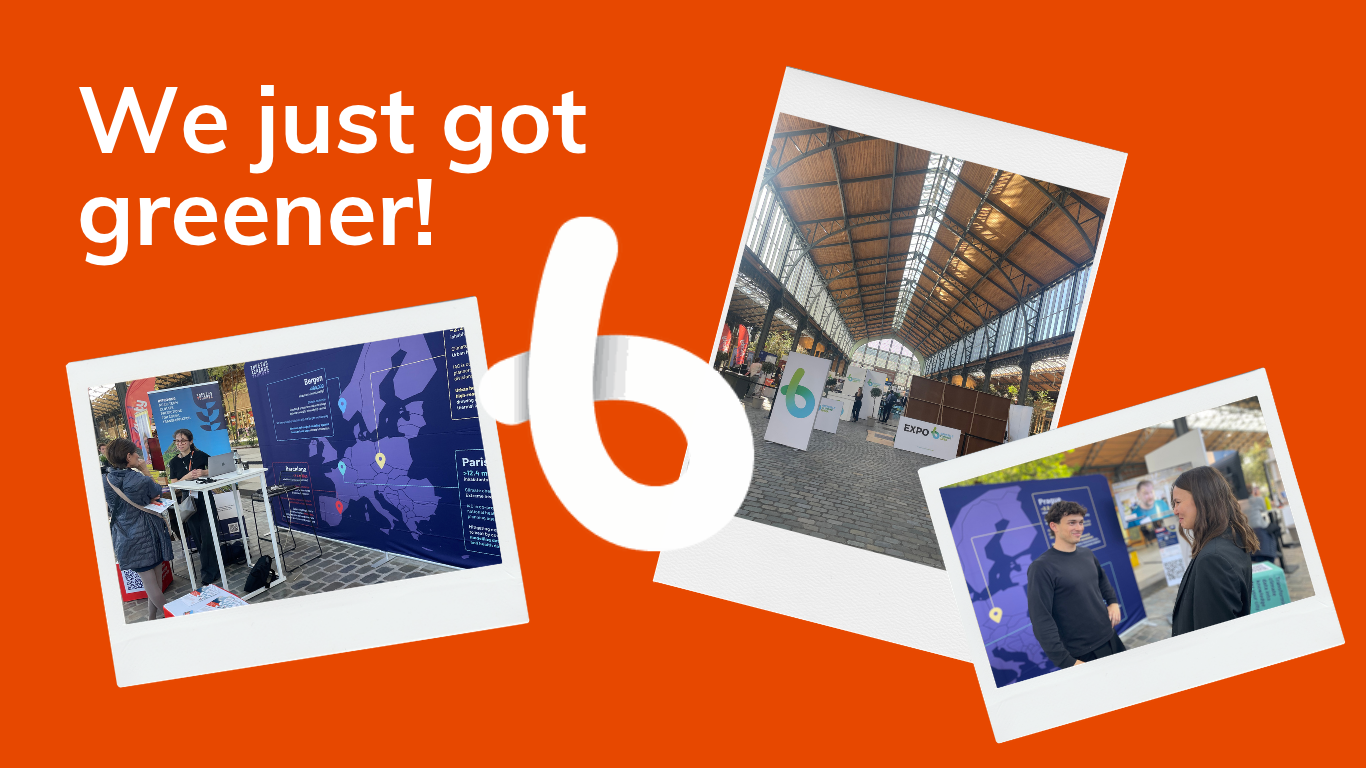
At Arctik, we stay close to the conversations shaping the circular economy. This was the case last month, at the first edition of Brussels Climate Week. Speakers from the EU institutions, industry and city municipalities mentioned some compelling numbers: how the rate of circular material use remains at just 11.8%, versus raw material consumption at around 14 tonnes per person; how recycling rates, meanwhile, have plateaued at around 44%. At face value, these statistics could elicit scepticism: if the circular economy is widely recognised as both an environmental and economic opportunity, why has progress remained slow?
Zooming in on the Industry Day sessions, here are parts of the discussion that felt particularly relevant to our work, and the broader arguments they raise for the future of the circular economy.
Creating the right conditions for circular markets
Susanne Schilderman, Deputy Mayor of Utrecht, the Netherlands, highlighted the role public authorities can play in shaping markets. She pointed to public procurement as a powerful lever for change, alongside initiatives such as material depots, brick exchange schemes and material scoring systems, comparable to nutrition labels on food products. She also argued that environmental externalities are still not adequately reflected in the price of products and materials, making it harder for circular solutions to compete.
This link between environmental criteria and purchasing decisions is also reflected in Arctik’s support for the EU Ecolabel, which involves showcasing the scheme’s success stories. One example shows how furniture company Softrend gained access to public tenders in Scandinavia where environmental labelling was a requirement. Watch the EU Ecolabel success story.
The importance of creating the right framework for investment was also a recurring theme. Emmanuel Chaponniere, Head of Division for Circular Economy & Sustainable Development at the European Investment Bank, stressed that businesses need long-term certainty to invest and scale circular solutions, while highlighting the challenges of securing sufficient feedstock, maintaining quality and moving technologies from pilot projects to commercial deployment.
Making circularity work in practice
From an industry perspective, Steve Claus, Secretary General at Steel Packaging for Europe, called for clearer and more harmonised rules for circular products and materials across Europe. In particular, he highlighted the importance of stronger Extended Producer Responsibility schemes, arguing that producers should take greater responsibility for the full lifecycle of their products and face stronger incentives to use circular materials.
This need to translate environmental rules into business practice is also reflected in the European Commission’s Eco-Management and Audit Scheme (EMAS), which aims to help organisations turn environmental ambitions into practice by systematically managing, measuring and continuously improving their environmental performance. Read more about how EMAS supports retailers.
Even if the discussion continues…
At the end of the day, the conversation cannot be resolved in one event. But, here are some things to continue to cycle over in your head:
- Public procurement of goods, materials and infrastructure can be a powerful driver of circular markets.
- Businesses need clear and predictable rules to invest in and scale up circular solutions.
- Environmental costs are still not fully reflected in prices.
- Markets and regulation must work together to accelerate circularity.
- Accelerating circularity requires coordinated action across the value chain, combining policy, market incentives and consumer engagement.
Find out more
Readers interested in exploring these themes further may also enjoy Building a circular economy with the EU Ecolabel, which looks at how the EU Ecolabel can support circularity and competitiveness, and the EU Circular Talks, featuring webinars on a range of circular economy topics.
Have thoughts on how to foster local uptake of circular solutions? Circular practitioners and city and regional actors across Europe are invited to share their technical support needs and priorities in the Circular Cities and Regions survey: https://ec.europa.eu/eusurvey/runner/CCRI-CSO-II.
About the event
The first Brussels Climate Week took place on 12-15 October 2026. It brought together climate experts, policymakers, businesses and citizens across four thematic days: Tech & Innovation Day, Energy Day, Industry Day and Urban Day. Nearly 3,000 participants attended events at Tour & Taxis, with more than 1,000 additional participants joining partner events across Brussels.